
Policy & Implementation
Translating emissions evidence into enforceable, equitable, and institutionally grounded action
Effective policy depends not only on identifying pollution sources, but on designing interventions that institutions can implement, communities can trust, and regulators can enforce.
What We Analyze:

Policy Design & Targeting
We identify where standards, targets, and interventions can deliver the greatest air-quality, climate, and equity gains.
- Source-specific intervention design
- Standards and target-setting support
- Priority area identification
- Cross-sector policy alignment

Implementation & Institutional Strategy
We evaluate how governance capacity, enforcement, and coordination shape whether policies succeed in practice.
- Implementation pathway assessment
- Inter-agency coordination analysis
- Regulatory feasibility evaluation
- Monitoring and compliance strategy

Equity, Accountability & Public Health
We connect policy choices to exposure disparities, health outcomes, and the lived realities of affected communities.
- Exposure and burden disparities
- Health and welfare co-benefits
- Accountability and transparency metrics
- Community-centered policy evaluation
Data & Measurement


System Analysis

Policy Design

Implementation & Enforcement

Health & Equity Outcomes
From Evidence To Action:
Turning emissions insights into enforceable policy, institutional strategy, and measurable outcomes
We translate scientific evidence on emissions, exposure, and health into actionable policy strategies. By linking spatial analysis with institutional realities, we help decision-makers design interventions that are both technically effective and practically implementable.
Our work focuses on identifying where policy interventions will have the greatest impact, evaluating governance and enforcement challenges, and ensuring that strategies reduce pollution while advancing equity and public health.
What This Enables:
- Evidence-based environmental policy design
- Identification of high-impact intervention points
- Governance and implementation pathway analysis
- Monitoring, accountability, and compliance strategy
- Equity-focused policy evaluation
Case Example: Waste Burning, Public Health, and the Taj Mahal
How failures in municipal waste management degrade air quality, harm communities, and threaten a global heritage site.
The Problem:
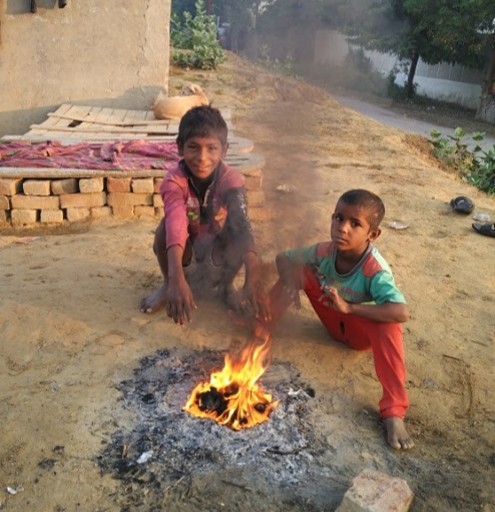
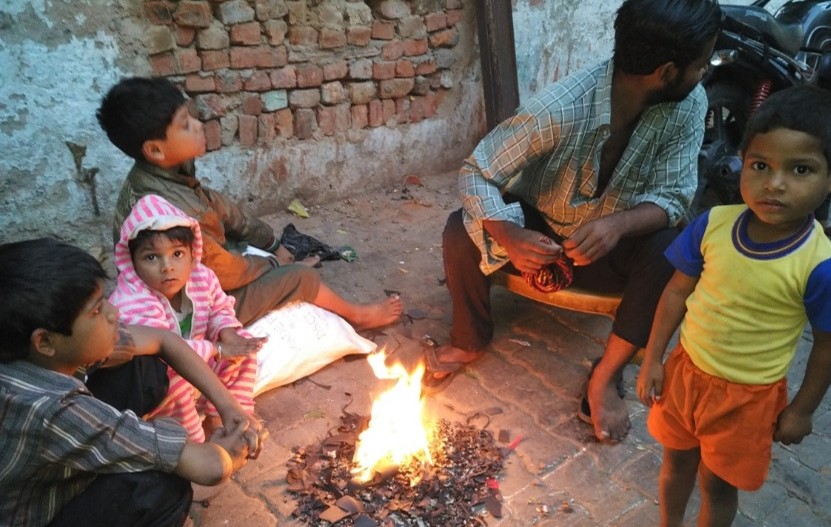
Open burning of municipal solid waste and biomass fuels contributes to severe air pollution in Agra, degrading air quality, harming public health, and depositing particulate pollution onto the Taj Mahal.
Rapid urban growth and limited waste management infrastructure leave large volumes of trash accumulating in streets and frequently burned in residential areas.
The Analysis:
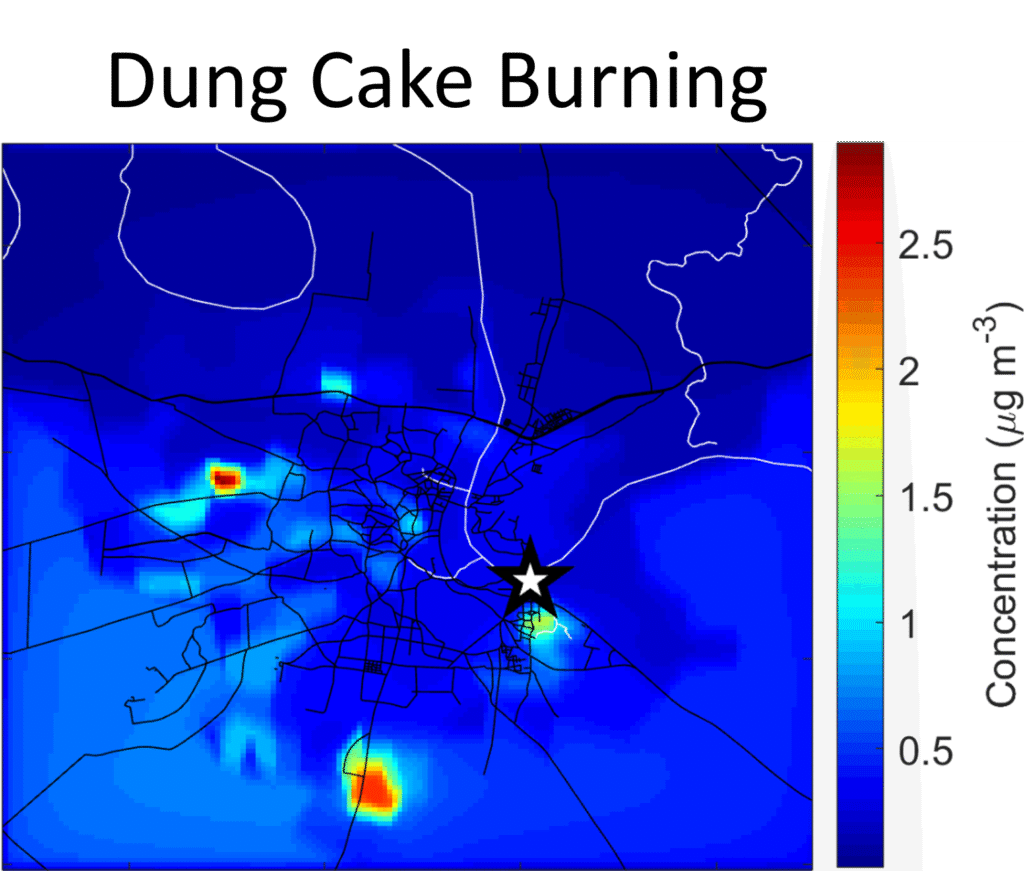
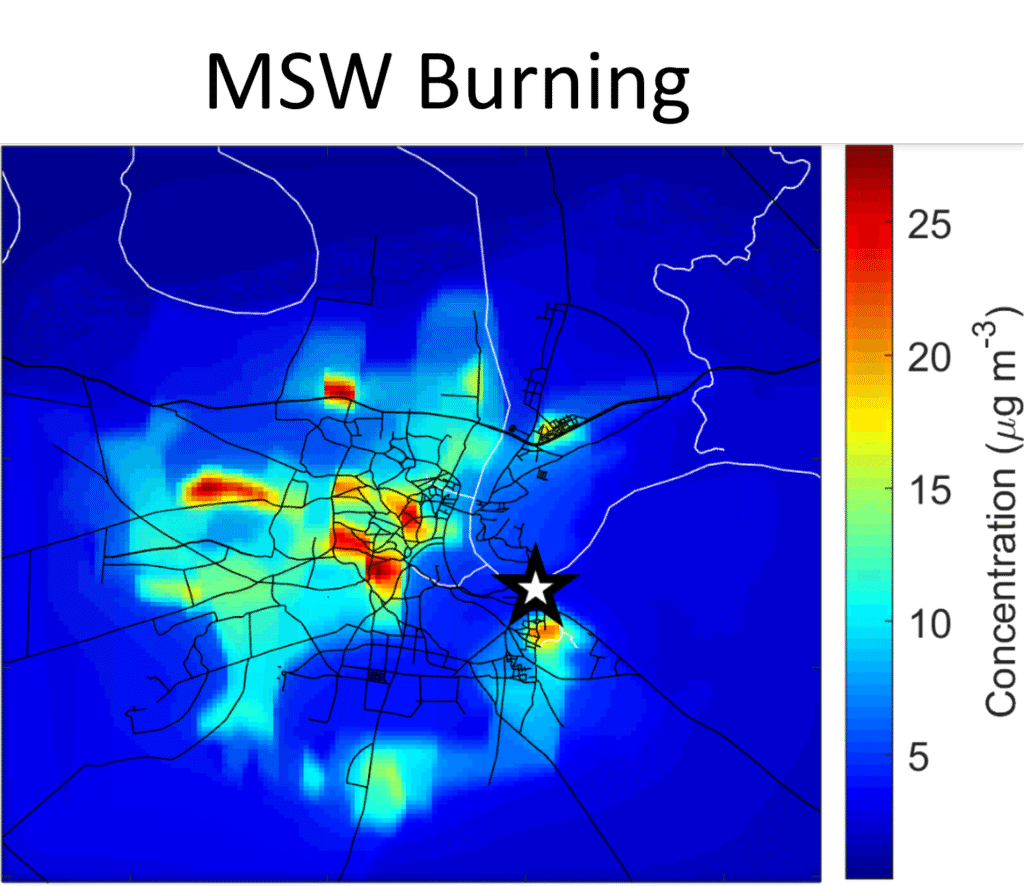
We combined field observations of waste burning, neighborhood-scale emission inventories, and atmospheric dispersion modeling to quantify how municipal solid waste (MSW) burning and dung cake combustion contribute to PM₂.₅ concentrations across Agra and deposition onto the Taj Mahal.
The analysis linked local pollution sources, human exposure, and heritage site impacts.
Key Findings:
- Open municipal waste burning was the largest contributor among the sources studied
- Waste burning produced ~4.3 μg/m³ PM₂.₅ at the Taj Mahal
- Waste and dung burning together contribute to ~713 premature deaths per year in Agra
- Pollution levels are highest in lower socioeconomic neighborhoods
Policy Implication:
Protecting the Taj Mahal and improving air quality in Agra requires addressing urban waste management systems, not only traditional pollution controls.
Improved waste collection, management infrastructure, and enforcement against open waste burning could simultaneously:
- Reduce urban air pollution
- Improve public health
- Protect a globally significant cultural heritage site
Read the peer-reviewed article (open access):
Municipal solid waste and dung cake burning: discoloring the Taj Mahal and human health impacts in Agra
🌍 Evidence-driven policy reveals leverage points—where targeted action can improve air quality, reduce climate risk, and protect vulnerable communities simultaneously.